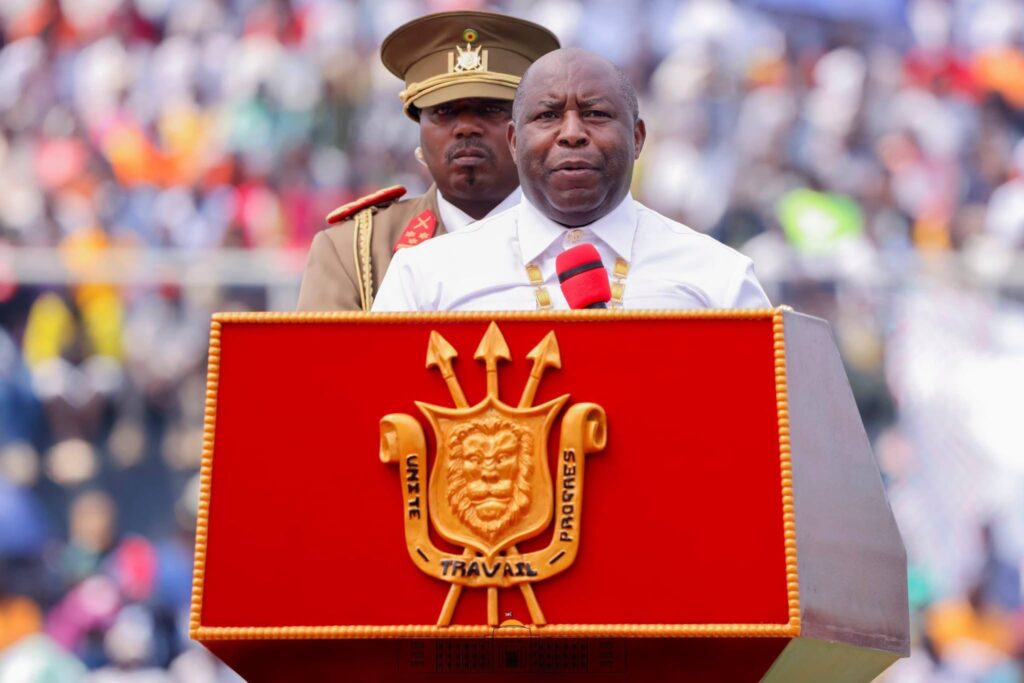

On May 20, 2026, Burundi’s Minister of Justice, Alfred Ahingejeje, appeared before lawmakers and pledged major reforms aimed at reducing prison overcrowding across the country. While the announcement was presented as a response to a growing crisis, a review of previous government commitments reveals that similar promises have been made repeatedly over the years, with limited evidence of lasting implementation.
A Problem Successive Governments Have Already Acknowledged
The issue of prison overcrowding is not new.
In January 2023, then-Minister of Justice Domine Banyankimbona announced a campaign to release inmates convicted of minor offenses, including the theft of chickens, goats, hoes, and bicycles. The objective was to ease pressure on detention facilities and reduce the number of people imprisoned for non-violent crimes.
At the time, Banyankimbona reminded prosecutors and judicial police officers that “freedom is the rule and imprisonment the exception.” She also urged judicial authorities to avoid automatically incarcerating debtors and instead prioritize restitution and alternative dispute-resolution mechanisms.
Three years later, however, prison overcrowding remains a critical challenge, raising questions about the effectiveness and sustainability of those earlier measures.
What the Latest Official Figures Show
During a parliamentary session reviewing observations from the Court of Auditors concerning Bubanza Prison, Minister Ahingejeje presented alarming figures that illustrate the extent of the crisis.
Several prisons are operating far beyond their intended capacity:
- Bururi Prison, built in 1926 to accommodate 400 inmates, currently houses approximately 1,440 detainees.
- Muyinga Prison, constructed in 1945 with a capacity of 300 inmates, now holds 603 detainees.
- Muramvya Prison, established in 1949 for 100 inmates, reportedly accommodates 1,075 detainees.
- Ruyigi Detention Facility currently houses 790 inmates despite a capacity of 300.
- Bubanza Prison, designed in 1952 for 200 inmates, now holds 434 detainees.
- Mpimba Central Prison, Burundi’s largest prison, was built in 1969 for 800 inmates but currently accommodates around 4,200 prisoners.
The figures suggest that some facilities are operating at several times their intended capacity, creating significant concerns regarding detention conditions, health, safety, and the protection of inmates’ rights.
Budget Cuts Amid Rising Needs
The overcrowding crisis is compounded by declining financial resources allocated to the prison system.
According to figures presented during parliamentary discussions, more than 8 billion Burundian francs were allocated to prisons in the 2025–2026 budget year, compared with more than 12 billion francs in 2024–2025 and more than 14 billion francs in 2023–2024.
This downward trend comes despite a growing prison population and increasing operational needs within correctional facilities.
The reduction in funding raises questions about the government’s capacity to improve detention conditions while simultaneously addressing chronic overcrowding.
Parliamentary Reaction Sparks Constitutional Debate
The presentation prompted an unusually strong reaction from the Speaker of the National Assembly, who suggested that ministers who fail to fulfill their responsibilities should be removed from office.
The statement immediately generated debate among legal experts.
Constitutional lawyer Simon argued that such remarks do not fall within the direct constitutional powers of Parliament. He pointed to Article 163 of Burundi’s Constitution, which assigns Parliament the responsibility of passing laws and overseeing government action.
According to the lawyer, Parliament already possesses oversight mechanisms but has not always exercised them fully.
He further noted that Article 208 of the Constitution provides lawmakers with the ability to initiate a motion of censure against the government, requiring a three-fifths majority vote when ministers fail to perform their duties.
The debate highlights broader concerns about institutional accountability and the effectiveness of parliamentary oversight.
Fact-Check: Are the Current Promises New?
Partly True.
The government has once again acknowledged the severity of prison overcrowding and promised reforms. However, similar commitments were publicly announced in 2023 and in previous years.
Available evidence shows that despite those promises, overcrowding remains widespread across Burundi’s prison system. The latest figures presented by the Ministry of Justice indicate that the structural problem has not been resolved.
While new reform efforts may be under consideration, there is currently no publicly available evidence demonstrating that previous commitments have produced long-term reductions in prison overcrowding.
Conclusion
Burundi’s prison overcrowding crisis remains one of the country’s most persistent justice-sector challenges. The latest figures presented before Parliament confirm that detention facilities continue to operate far beyond their intended capacities, despite years of government promises to address the problem.
As the 2025–2030 legislature begins its mandate, lawmakers are constitutionally tasked with both legislating and overseeing government performance. Beyond political statements, the effectiveness of Parliament’s oversight role will likely be measured by whether concrete action follows repeated warnings about prison conditions.
For thousands of detainees living in overcrowded facilities, the question is no longer whether reforms will be promised, but whether they will finally be implemented.
_______
Photo: Justice Minister Alfred Ahingejeje acknowledges that judicial failures are worsening the prison crisis/ ©Burundi National Assembly